Chinese-owned AESC has pushed back plans in sign of slowing transition from petrol and diesel to electric cars
Andy Burnham moves to cut new EV sales targets
The UK’s biggest gigafactory has shelved plans to expand production in Sunderland because of stalled talks on a deal to supply electric car batteries to Jaguar Land Rover.
Chinese-owned AESC produces batteries for Nissan at its gigafactory next door to the Japanese carmaker’s Sunderland plant. However, AESC has had to push back its ramp-up plans because of lower-than-expected demand from Nissan and the lack of a deal with JLR, according to people with knowledge of the situation.
The delays are another sign of the slowing transition from petrol and diesel to electric cars. Andy Burnham’s Labour government on Friday revealed that it could cut the UK’s electric car sales targets further, in a potential blow to the electric vehicle supply chain.
Battery manufacturers in the UK and Europe have had a difficult few years as carmakers have retreated from previous ambitious targets to switch from internal combustion engines to electric vehicles. Several big European battery projects have gone bankrupt, while others have been forced to scale back plans in an industry dominated by Chinese players such as CATL and BYD, the world’s biggest maker of electric cars.
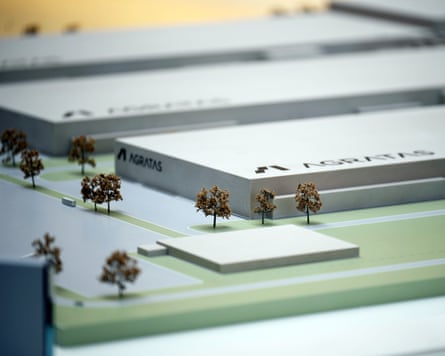
JLR’s sister company, Agratas, is building its own gigafactory in Somerset, England. That plant is not scheduled to start production until 2027. The Guardian in June reported that Agratas has faced construction difficulties that could delay the start of production further.
JLR, Britain’s largest automotive employer, was close to a supply deal with AESC last year as part of its efforts to secure cells until the Agratas factory is up and running. It is understood JLR has reached agreements with other battery suppliers in the meantime.
The failure to secure JLR as a customer has had a knock-on impact on AESC. The Sunderland gigafactory has two manufacturing lines operating, but has so far held off installing a third line to supply JLR.
One person familiar with the situation said talks had stalled between JLR and AESC because the carmaker was unwilling to make formal financial commitments. Another person suggested that disputes over the cost and timing of the supply of batteries were the issue.
AESC also has plans for two more lines to supply Nissan. That is still understood to be the long-term plan, but the carmaker has slowed down its shift to electric as it goes through a painful process of shutting factories and laying off thousands of workers.
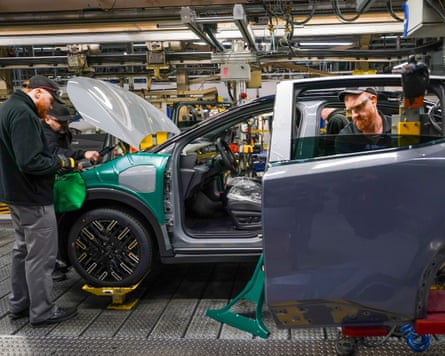
Some people who spoke to the Guardian said they had concerns over the scale of demand for Nissan in the next few years. Nissan has stopped production of its own cars on one of its two assembly lines in Sunderland in preparation for making cars for China’s Chery. Chery could theoretically also source batteries for its cars from AESC, but it has not yet finalised the deal with Nissan.
The uncertainty over the plans reflects the changing mood in the electric car industry in recent years. Carmakers’ commitments to rapid electrification of their products have been scaled back as demand did not rise as quickly as expected and some governments – notably the US under Donald Trump – have turned against electric cars.
The slowdown in the transition plus higher interest rates caused problems – often terminal – for Europe’s battery makers. The most high-profile collapses were Sweden’s Northvolt and UK imitator Britishvolt, while Automotive Cells Company, co-owned by carmakers Stellantis and Mercedes-Benz and oil company TotalEnergies, has cancelled two gigafactory plans and China’s SVolt ended efforts to build a German plant.
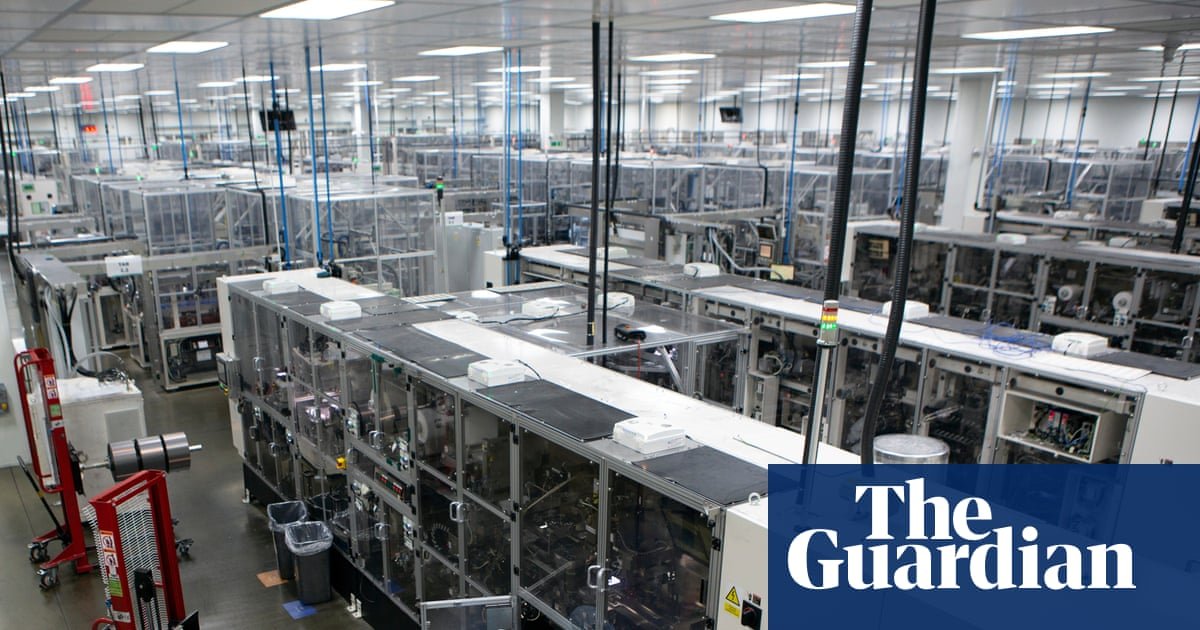
Speaking at an industry conference in June, an Agratas executive underlined the complexity of building and expanding gigafactories. Karthik Selvan, the Agratas chief procurement officer, said 1,000 shipping containers are needed to transport the equipment for a single assembly line, with half a kilometre of machines from end to end. Agratas’s gigafactory in Somerset will have 500km of pipes and 600km of wiring, he said.
Much of the factory must be operated as a clean room to prevent contamination of cells, while robots must be able to cut and seal cells to an accuracy of about two microns. A human hair can be about 40 or 50 microns thick.
The business that became AESC was first started within Nissan, producing batteries for the carmaker’s pioneering Leaf electric car with 1.8 gigawatt hours (GWh) of total capacity each year. In 2021, amid the coronavirus pandemic boom in spending on green technologies, AESC said it was targeting a huge 38GWh of annual capacity. In recent years the company has said that was more an aspirational goal rather than a firm target. AESC is now aiming for annual output of 15.8GWh, enough for about 300,000 electric cars.
AESC has other European plants. Its French factory is understood to be performing well thanks to strong demand for the Renault 5, a hit electric car. However, construction of another gigafactory in Spain has been delayed.
A person familiar with the situation said that AESC is still confident in the prospects for long-term battery demand, including the possibility of making to store energy from intermittent solar and wind power. Last year AESC was able to secure a £1bn refinancing, including money from the UK government, to fund the Sunderland gigafactory.
The slower-than-expected ramp-up has also cast doubt on plans to build a “microgrid” to include power generation beside the factory for AESC and Nissan. The microgrid would have offered cheaper energy, making the energy-intensive factories more competitive against European or Chinese peers who pay less for electricity.
AESC, Chery and JLR declined to comment.
Electric, hybrid and low-emission cars